Introduction
Choosing the right storage drive is one of the most important decisions for any computer user today. Whether you use your system for business, gaming, or daily tasks, storage directly impacts speed and performance. This SSD vs HDD comparison helps you understand which option suits your needs best. Many users struggle to decide between traditional hard disk drives and modern solid-state drives because both have advantages. Understanding how they work, their cost differences, and performance levels can help you avoid unnecessary upgrades. At MaxiPleit Services (https://maxipleitservices.com/), we regularly help customers choose the best storage solution for their computers. SSD vs HDD With expert guidance and professional support available at 888-284-1303, you can make confident technology decisions that improve reliability and long-term performance.
Understanding the Basics
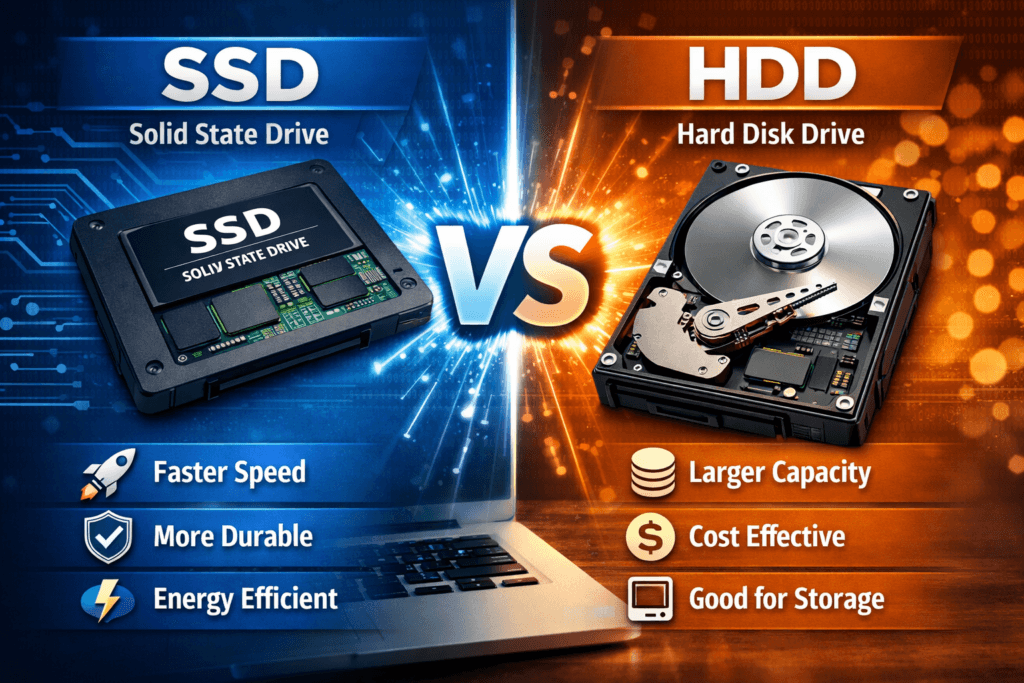
Storage devices are responsible for saving your operating system, files, and applications. This SSD vs HDD comparison begins with how each drive works internally.
HDDs use spinning magnetic disks and mechanical arms to read and write data. Because of moving parts, they are slower and more prone to wear over time. SSDs store data on flash memory chips, allowing instant access without physical movement.
This fundamental difference affects speed, durability, and energy usage. Understanding this core distinction helps users choose storage based on performance expectations and budget limitations.
Design and Technology
SSDs rely on NAND flash memory, similar to smartphones and tablets. HDDs depend on decades-old mechanical technology that limits speed.
The lack of moving parts makes SSDs quieter and more shock-resistant. HDDs remain functional but are more sensitive to drops and vibrations during operation.
Performance and Speed
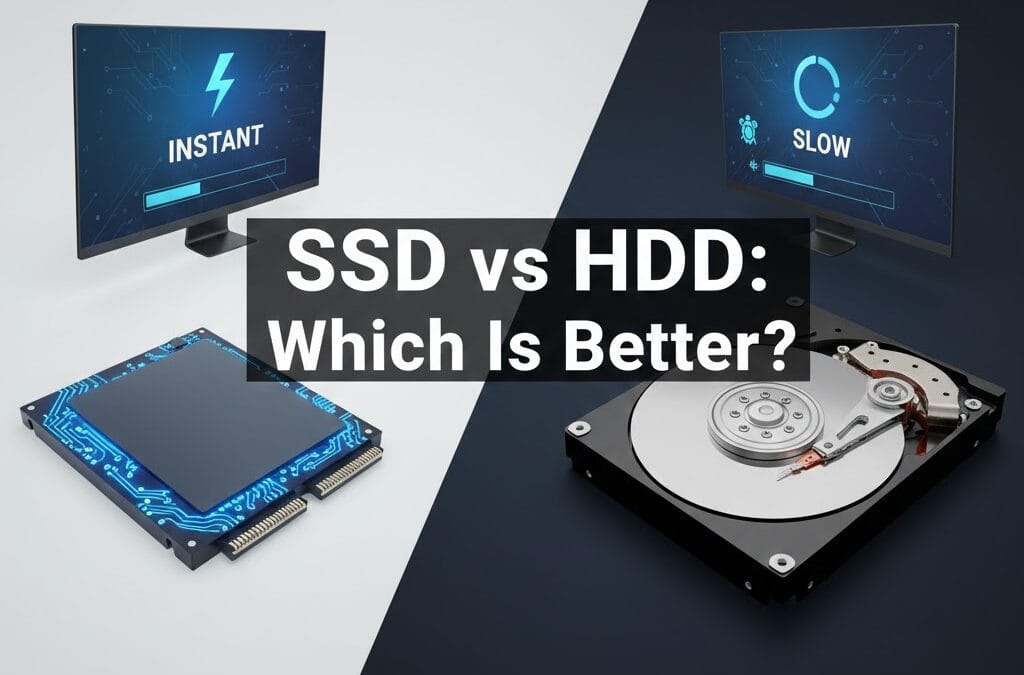
Speed is one of the biggest reasons users switch storage drives. This clearly shows the performance gap. SSD vs HDD
SSDs boot operating systems in seconds, while HDDs may take over a minute. Applications launch faster, and file transfers complete quickly with SSD storage. Multitasking also feels smoother when using an SSD.
HDDs are slower but still adequate for basic computing tasks. For users focused on performance efficiency, SSDs deliver a noticeable improvement.
SSD vs HDD Daily Computer Tasks
Everyday tasks such as web browsing, document editing, and software loading benefit from SSD speed. HDDs handle these tasks but with visible delays.
Professionals working with large files or multiple programs simultaneously see significant performance gains with SSDs.
Storage Capacity and Cost
Cost remains a major deciding factor in any . HDDs offer more storage at a lower price per gigabyte.
Large-capacity HDDs are ideal for data archives, backups, and media storage. SSDs cost more but prices continue to drop steadily each year.
Many users now combine both options, using SSDs for system files and HDDs for bulk storage. This hybrid approach balances performance and affordability effectively.
Budget-Conscious Users
If budget is limited, HDDs provide reliable storage at minimal cost. SSDs are an investment that delivers speed and long-term value.
Choosing the right drive depends on whether performance or storage capacity is the priority.
Durability and Lifespan
Durability is another important factor in this . SSDs are more resistant to physical damage due to the absence of moving parts.
HDDs wear down mechanically over time, increasing the risk of failure. SSDs have limited write cycles, but modern drives last many years under normal use.
For laptops and portable systems, SSDs are generally the safer choice. Reduced heat output also improves overall system longevity.
Long-Term Reliability
SSDs generate less heat, consume less power, and reduce stress on internal components. HDDs remain dependable but require careful handling.
Regular maintenance and backups extend the lifespan of both storage types.
Gaming and Professional Use
Gaming and professional workloads demand fast storage access. This shows why SSDs dominate these environments.
Games load faster, textures render quickly, and system lag decreases with SSDs. Creative professionals benefit from faster file access and rendering times.
HDDs may still be used for storing completed projects or older games. However, primary applications perform better on SSD storage.
Business Environments
Businesses prioritize efficiency, data security, and system uptime. SSDs improve workflow speed and reduce downtime.
HDDs remain useful for servers requiring large data storage at lower costs.
Which SSD vs HDD Should You Choose?
The fina depends on your usage needs, budget, and performance expectations. SSDs are ideal for speed, portability, and reliability.
HDDs are best suited for users needing large storage capacity at an affordable price. Many modern systems benefit from using both storage types together.
At MaxiPleit Services, we help customers upgrade, install, and optimize storage solutions professionally. Our technicians ensure compatibility and maximum performance.
📞 Call 888-284-1303
🌐 Visit https://maxipleitservices.com/
Let our experts help you choose the right storage upgrade for your computer today.