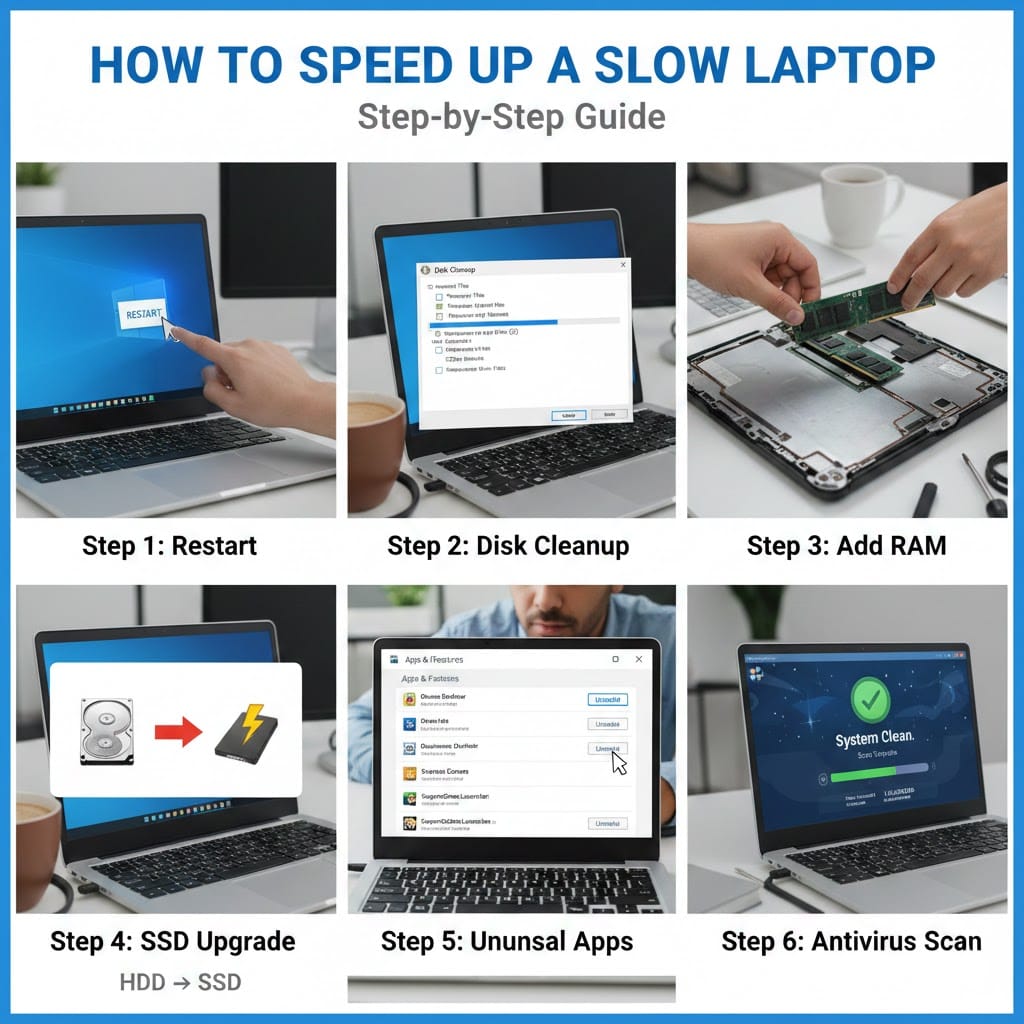
Is your laptop taking forever to boot, open programs, or load websites? A slow laptop performance issue can affect productivity, cause frustration, and reduce your device’s lifespan. Many users think they need a new system, but in reality, small optimizations can significantly improve speed. In this step-by-step guide, we explain practical methods to fix without technical complications.
Whether you use your laptop for office work, studies, or business operations, improving system speed is essential. If you need professional assistance, visit https://maxipleitservices.com/ or call 8882841303 for expert support. Let’s begin with simple solutions that deliver noticeable improvements.
1. Check Startup Programs to Fix Slow Laptop Performance
One major cause of is too many startup applications running in the background. When you install software, many programs Slow Laptop Performance automatically add themselves to startup. This increases boot time and consumes RAM unnecessarily.
Disable Unnecessary Startup Apps to Reduce
Open Task Manager by pressing Ctrl + Shift + Esc.
Click on the “Startup” tab and review enabled applications.
Disable programs that are not essential, such as music apps or auto-updaters.Slow Laptop Performance
Reducing startup apps can significantly improve boot speed. After restarting, you will likely notice faster system responsiveness.
2. Clean Temporary Files to Improve
Temporary files accumulate over time and consume valuable storage space. When storage becomes. Slow Laptop Performance cluttered, becomes noticeable.
Use Disk Cleanup to Resolve Slow Laptop Performance
Search for “Disk Cleanup” in the Windows search bar.
Select your main drive, usually C:.
Delete temporary files, system cache, and recycle bin content.
You can also use Storage Settings to remove unnecessary files. Performing this cleanup monthly prevents storage. Slow Laptop Performance overload and enhances overall speed.
3. Upgrade RAM to Fix
Insufficient memory is a common reason for If your system struggles while multitasking, RAM might be the bottleneck.
How More RAM Improves
Most modern systems require at least 8GB RAM for smooth operation.
Upgrading to 16GB improves multitasking and heavy application usage.
Check your laptop specifications before purchasing compatible RAM.
If you are unsure about compatibility, Slow Laptop Performance professional technicians at Maxiple IT Services can assist you with proper upgrades.
4. Switch to SSD to Eliminate
Traditional hard drives are significantly slower than SSDs. Replacing an HDD with an SSD dramatically reduces boot time and loading delays associated with
Why SSD Upgrade Solves Slow Laptop Performance
SSDs provide faster data access speeds.
Applications open quicker and system responsiveness improves.
Battery efficiency may also improve after upgrading.
An SSD upgrade is one of the most effective long-term solutions for speeding up older laptops. Slow Laptop Performance
5. Remove Malware Causing
Viruses and malware consume background resources and create security risks. This directly leads to and unexpected crashes.
Scan System to Prevent Slow Laptop Performance
Install reliable antivirus software.
Run a full system scan regularly.
Remove suspicious programs from Control Panel. Slow Laptop Performance
Keeping your system secure ensures consistent performance and prevents hidden background processes from slowing down operations.
6. Update Operating System to Avoid
Outdated operating systems may contain bugs and inefficiencies. Regular updates often include performance enhancements and security patches that reduce
Enable Automatic Updates to Fix
Go to Settings → Update & Security.
Check for pending updates.
Install updates and restart your system.
However, ensure your laptop meets hardware requirements before. Slow Laptop Performance installing major updates.
7. Adjust Visual Effects to Improve
Windows visual animations look attractive but consume processing power. Disabling unnecessary effects can improve especially on older systems.
Change Performance Settings for Better Slow Laptop Performance
Search “Performance Options” in Windows.
Select “Adjust for best performance.”
Apply changes and restart.
This step reduces graphical load and improves responsiveness instantly.
8. Uninstall Unused Programs Causing
Unused applications occupy storage and sometimes run background services. Removing them can reduce
Remove Unnecessary Software to Fix Slow Laptop Performance
Open Control Panel → Programs → Uninstall a Program.
Identify rarely used applications.
Uninstall them carefully.
This cleanup frees storage and reduces background resource usage.
9. Keep Drivers Updated to Prevent
Outdated drivers may cause hardware inefficiency and system lag. Updating drivers helps eliminate. Slow Laptop Performance compatibility issues responsible for
Update Device Drivers to Reduce
Open Device Manager.
Right-click important drivers like Display and Storage controllers.
Select “Update Driver.”
Driver updates optimize hardware communication with the operating system.
10. Restart Regularly to Manage
Many users rarely restart their laptops, keeping background processes running continuously. Regular restarts help clear temporary memory issues and reduce
A simple restart refreshes system memory and stops unnecessary background tasks. Slow Laptop Performance
When to Seek Professional Help for
If you have tried all these steps and still experience , there may be deeper hardware or software issues. Problems like failing hard drives, motherboard faults, or overheating require expert diagnosis.
For reliable laptop repair and upgrade services, visit https://maxipleitservices.com/ or call 8882841303 today. Professional assistance ensures long-term solutions rather than temporary fixes.
Final Thoughts
Dealing with does not always mean replacing your device. By disabling startup programs, cleaning files, upgrading RAM, installing an SSD, and removing malware, you can significantly enhance speed. Regular maintenance prevents future slowdowns and extends your laptop’s lifespan.
Follow this step-by-step guide carefully, and your system should run smoother and faster. If technical issues persist, do not hesitate to contact Maxiple IT Services for expert support and reliable upgrades.