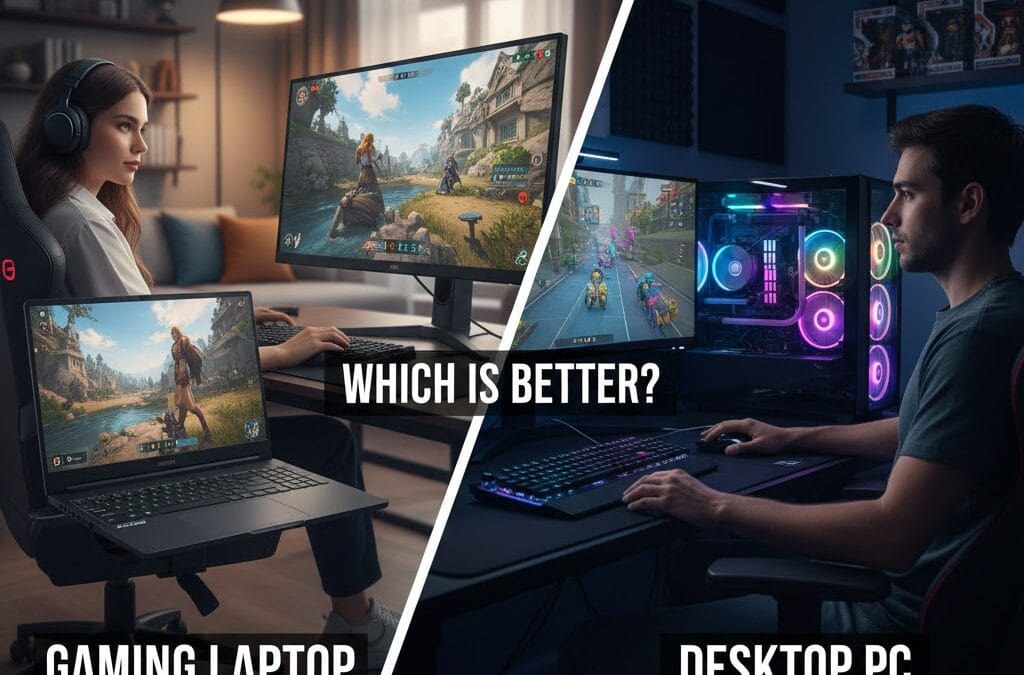
Choosing the right gaming system can be confusing, especially with rapid hardware advancements. The debate continues to dominate the gaming community because both options offer powerful performance and immersive gameplay. Gamers today must consider portability, performance, upgrade potential, and long-term value before investing. A gaming laptop offers flexibility and convenience, while a desktop PC delivers unmatched power and customization.
Understanding the real differences between these systems helps you avoid overspending or choosing the wrong setup. This guide explores performance, pricing, upgrades, cooling, and usability to help you decide Gaming Laptop confidently. Whether you are a casual gamer or a competitive enthusiast, knowing which system fits your lifestyle is essential. For expert gaming and IT guidance, visit https://maxipleitservices.com/ or call 888-284-1303 for personalized support.
Performance Comparison
Performance is the core of the discussion.
Desktop PCs generally outperform gaming laptops because they support full-sized CPUs and GPUs. These components run at higher power limits, delivering better frame rates and graphical quality. Desktops maintain consistent performance during long gaming sessions without throttling.
use mobile versions of processors and graphics cards. While modern laptops are powerful, thermal and power limits reduce sustained performance. High-end gaming laptops perform well, but desktops remain superior for demanding games.
CPU and GPU Power
Desktop PCs support flagship CPUs and GPUs with advanced cooling solutions. rely on efficiency-focused hardware to balance power and portability.
Portability and Lifestyle
Portability is where the comparison shifts dramatically.
Gaming laptops are designed for mobility. They allow users to game anywhere, whether traveling, attending LAN events, or moving between rooms. Gaming Laptop Everything is built into one device, making setup simple and fast.
Desktop PCs are stationary systems requiring a dedicated space. They need external monitors, keyboards, and power connections. While less portable, desktops offer a permanent and comfortable gaming environment.
Space Requirements
require minimal desk space. Desktop PCs need room for towers, monitors, and accessories.
Price and Overall Value
Cost plays a major role in the decision.
are more expensive for the same level of performance. Buyers pay a premium for compact design, portability, and integrated displays. Repairs and replacements can also be Gaming Laptop costly.
Desktop PCs offer better value per dollar. You can achieve higher performance at a lower price by building or upgrading a desktop system. Budget-conscious gamers often prefer desktops.
Long-Term Investment
Desktop PCs provide better long-term value due to easy upgrades. often require full replacement over time.
Upgrade and Customization
Upgrade potential strongly favors desktops in the comparison.
Desktop PCs allow users to upgrade GPUs, CPUs, RAM, storage, and cooling systems easily. This flexibility extends system lifespan and keeps performance current.
have limited upgrade options. Most models allow only RAM and storage upgrades. The CPU and GPU are permanently integrated, Gaming Laptop limiting future improvements.
Gaming Laptop vs Desktop PC: Hardware Flexibility
Desktop PCs offer unmatched customization. Gaming laptops focus on compact design rather than modular upgrades.
Gaming Laptop vs Desktop PC: Cooling and Thermal Performance
Cooling efficiency significantly impacts performance in the debate.
Desktop PCs use larger fans, liquid cooling, and better airflow. This keeps temperatures low and performance stable during extended gaming sessions.
Gaming laptops rely on compact cooling systems. Under heavy load, they may run hotter and Gaming Laptop louder. Thermal throttling can reduce performance in demanding games.
Gaming Laptop vs Desktop PC: Noise Levels
Desktop PCs can operate quietly with proper cooling. Gaming laptops often produce noticeable fan noise during gameplay.
Power Consumption and Efficiency
Power usage differs greatly in the Gaming Laptop vs Desktop PC comparison.
Gaming laptops are designed for energy efficiency and can run on battery for light tasks. However, gaming performance drops significantly when unplugged.
Desktop PCs consume more power but deliver consistent, unrestricted performance. They are designed for long gaming sessions without limitations.
Gaming Laptop vs Desktop PC: Battery Limitations
Gaming laptops are not ideal for extended unplugged gaming. Desktop PCs do not face power restrictions. Gaming Laptop
Gaming Experience and Displays
The gaming experience is another key factor in the discussion.
Gaming laptops include built-in high-refresh-rate displays. This provides convenience but limits screen size and upgrade options.
Desktop PCs support larger monitors, ultrawide screens, and multi-monitor setups. This enhances immersion and competitive performance.
Display Flexibility
Desktop PCs offer more display choices. Gaming laptops are limited to built-in screens or external monitors.
Gaming Laptop vs Desktop PC: Who Should Choose What?
Choosing between depends on your lifestyle and priorities.
Gaming laptops are ideal for students, travelers, and users with limited space. They provide flexibility and solid performance for most games.
Desktop PCs are best for serious gamers, streamers, and content creators. They offer superior performance, upgrades, and long-term value. Gaming Laptop
For expert advice on choosing the right gaming system, visit https://maxipleitservices.com/ or call 888-284-1303 to speak with professionals.
Final Verdict: Gaming
There is no single winner in the debate. Gaming laptops excel in portability and convenience, while desktop PCs dominate in performance, customization, and value. Your decision should reflect your gaming habits, budget, and future plans. Making the right choice ensures an enjoyable and powerful gaming experience for years to come.