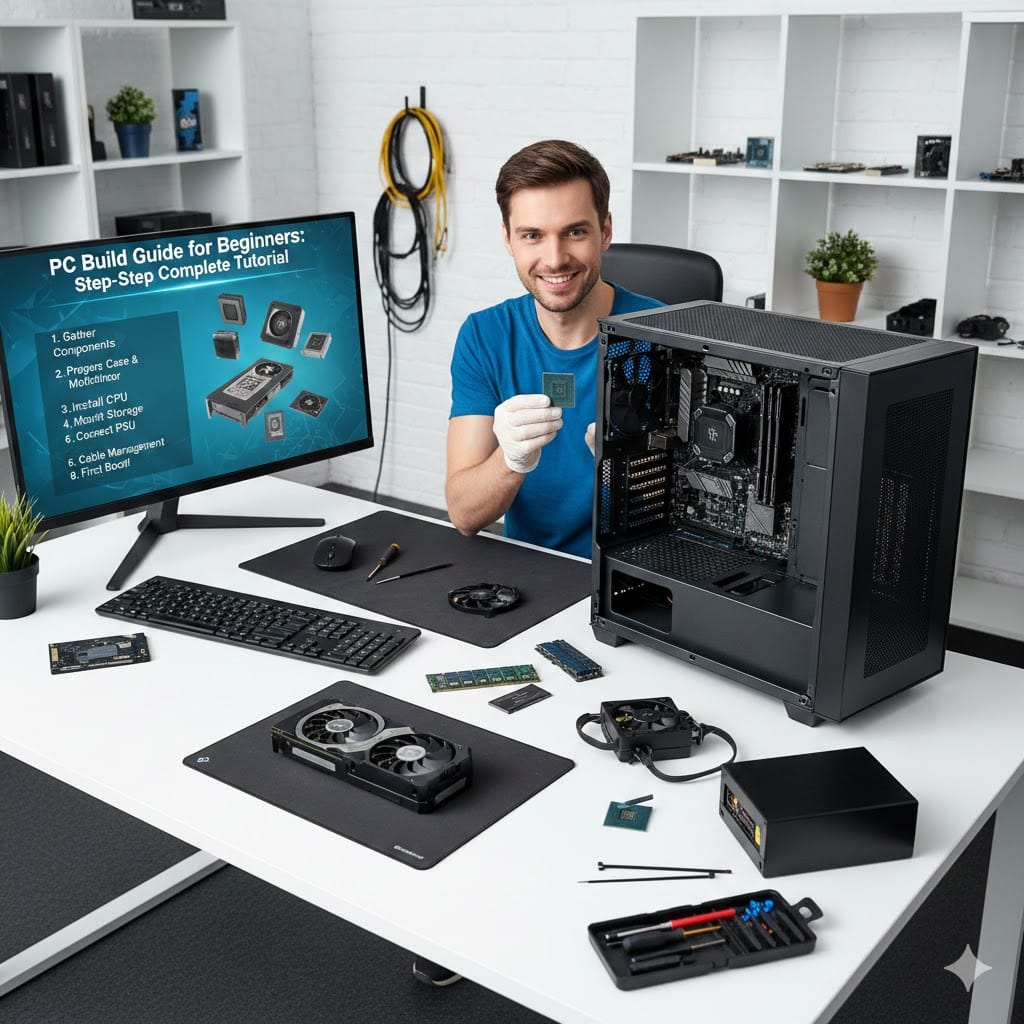
Building your own PC may sound complicated, but it is easier than most beginners expect. This PC build guide beginners article is written to help first-time builders understand every step clearly. Whether you want a PC for gaming, office work, or content creation, building it yourself gives better performance and value. You also get full control over components, upgrades, and budget decisions.
This PC build guide beginners explains each part in simple language without technical confusion. You will learn how to choose components, assemble them safely, install software, and avoid common mistakes. No advanced knowledge is required to follow this guide. By the end of this article, you will feel confident enough to build your own custom PC. Take your time, follow the steps carefully, and enjoy the process of creating a system that truly fits your needs.
Understanding the Basics of a Custom PC
Before starting this PC build guide beginners, it is important to understand what makes up a computer. A PC is a combination of essential hardware components working together. Each part has a specific role in performance and functionality.
A beginner should first understand how components communicate with each other. Compatibility is more important than buying the most expensive parts. Budget planning and purpose selection should always come first. This foundation will help you avoid unnecessary spending.
Main Components You Need
Every PC requires a processor, motherboard, RAM, storage, power supply, cabinet, and cooling. Optional parts include a graphics card and additional fans. Understanding these parts makes this PC build guide beginners much easier to follow.
Choosing the Right Components for Beginners
Component selection is the most critical step in any PC build guide beginners tutorial. Your usage decides the configuration. Office users, gamers, and editors all need different hardware combinations.
Spend time comparing specifications and reviews before purchasing. Always check compatibility using manufacturer websites or PC builder tools. This saves time and money later.
Processor (CPU) Selection
The CPU is the brain of your PC. Beginners should choose mid-range processors from Intel or AMD. These offer great performance without overheating or high costs.
Motherboard Compatibility
Your motherboard must support your chosen CPU and RAM type. This PC build guide beginners recommends choosing a motherboard with future upgrade options.
Memory, Storage, and Graphics Choices
RAM, storage, and graphics play a big role in speed and user experience. This PC build guide beginners focuses on balanced performance rather than overkill.
RAM affects multitasking and smooth performance. Storage affects boot speed and file access time. Graphics cards are essential for gaming and creative work.
RAM Selection for Beginners
Start with 16GB RAM for most tasks. It offers smooth performance and future-proofing. Always choose RAM compatible with your motherboard.
SSD vs HDD Storage
SSDs are faster and highly recommended in this PC build guide beginners. Use HDDs only for extra storage needs.
Power Supply and PC Cabinet Selection
A reliable power supply ensures system safety and stability. Beginners often underestimate its importance. This PC build guide beginners strongly advises choosing branded power supplies.
The PC cabinet affects airflow, cooling, and future upgrades. Choose a cabinet that supports your motherboard size and graphics card length.
Choosing the Right Power Supply
Select a PSU with at least 80+ Bronze certification. Wattage depends on your components, especially the graphics card.
PC Cabinet and Airflow
Good airflow prevents overheating and improves component lifespan. This PC build guide beginners recommends cabinets with front mesh designs.
Step-by-Step PC Assembly Process
Now comes the exciting part of this PC build guide beginners—assembling your PC. Work on a clean surface and handle components carefully.
Follow the order correctly to avoid damage. Take breaks if needed and never rush the process.
Installing CPU, RAM, and Storage
Install the CPU gently into the motherboard socket. Insert RAM sticks firmly until they click. Mount the SSD securely in its slot.
Mounting Motherboard and PSU
Place the motherboard inside the cabinet using standoffs. Install the power supply and connect cables neatly for airflow.
Graphics Card and Cable Management
Installing the graphics card is simple but requires care. This PC build guide beginners emphasizes proper cable management for cooling.
Secure cables using zip ties to prevent obstruction. Neat cable routing also improves system appearance.
Installing the Graphics Card
Insert the graphics card into the PCIe slot until locked. Secure it with screws and connect power cables.
Cable Management Tips
Route cables behind the motherboard tray. This improves airflow and makes future maintenance easier.
First Boot and BIOS Setup
Once assembly is complete, it is time for the first boot. This step in the PC build guide beginners confirms everything is working properly.
Enter BIOS to check component detection and temperatures. Update BIOS only if required.
BIOS Settings for Beginners
Enable XMP for RAM performance. Set boot priority for operating system installation.
Installing Operating System and Drivers
This PC build guide beginners recommends installing Windows or Linux depending on your needs. Use official installation files only.
After installation, install all required drivers. This ensures optimal performance and system stability.
Driver Installation Process
Install chipset, graphics, and network drivers first. Restart the system when required.
Common Mistakes Beginners Should Avoid
Even with a PC build guide beginners, mistakes can happen. Learning from common errors saves time and money.
Avoid forcing components or ignoring compatibility warnings. Always double-check connections.
Beginner Errors to Watch For
Loose cables, missing standoffs, and incorrect RAM slots are common mistakes. Always review your steps carefully.
Final Thoughts on Building Your First PC
Building a PC is a rewarding experience when done correctly. This PC build guide beginners proves that anyone can build a system with patience and planning.
You gain technical knowledge, save money, and enjoy better customization. Your confidence will grow with every successful step.
If you need professional guidance, component recommendations, or PC support, feel free to reach out.
About Maxiple IT Services
Website: https://maxipleitservices.com/
Phone Number: 8882841303
Maxiple IT Services provides expert PC solutions, technical support, and IT services for individuals and businesses.