Laptop maintenance can seem intimidating, but learning basic laptop hardware repair skills allows you to save money and extend your device’s lifespan. Many common issues, from slow performance to overheating, can be fixed by beginners with the right approach. Understanding how each component functions and identifying symptoms early are critical first steps.
This guide provides a beginner-friendly roadmap for laptop hardware repair, covering diagnosis, maintenance, replacement, and preventive care. Following these steps ensures you handle components safely while preventing accidental damage. For more complex repairs or professional support, visit https://maxipleitservices.com/ or call 8882841303 for expert assistance.
Understanding Your Laptop’s Hardware
Before attempting repairs, familiarize yourself with the laptop’s key components.
Laptop Hardware Repair: Key Components
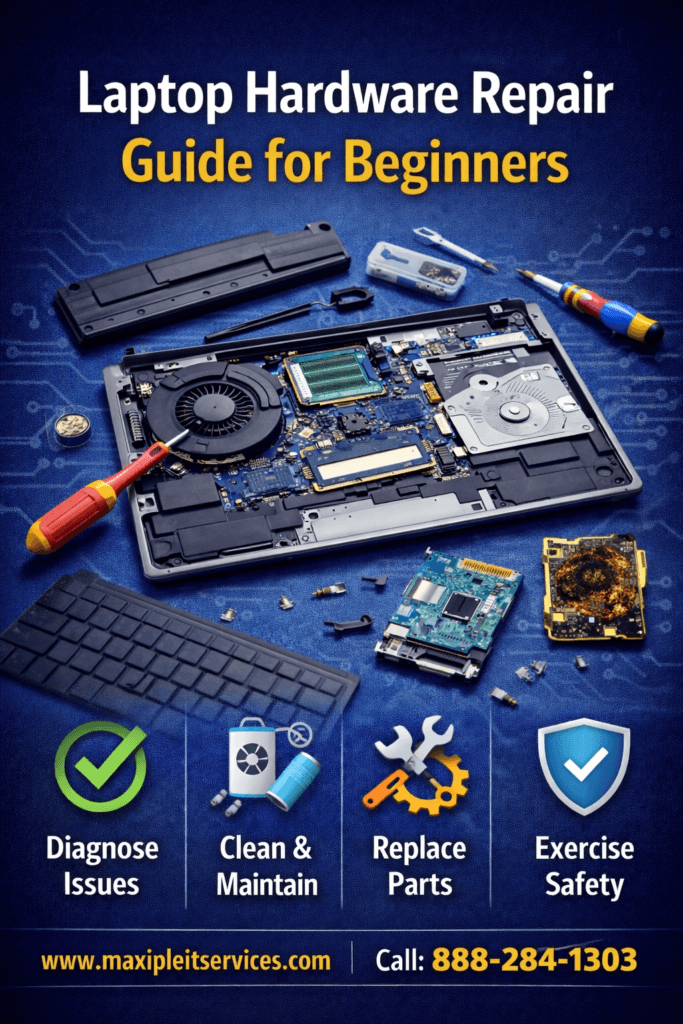
Critical parts include the motherboard, CPU, RAM, hard drive, battery, keyboard, and display. Knowing their functions helps beginners identify the source of issues effectively.
How Each Component Affects Performance
Every component works together to ensure smooth operation. Failing hardware may cause slow startup, crashes, or overheating, emphasizing the importance of understanding your system before attempting laptop hardware repair.
Diagnosing Common Laptop Problems
Accurate diagnosis is essential for effective repair.
Identifying Symptoms of Hardware Failure
Frequent symptoms include freezing, sudden shutdowns, overheating, flickering screens, and unresponsive keyboards. Observing patterns helps pinpoint the faulty component.
Simple Diagnostic Tools for Beginners
Use BIOS diagnostics, Device Manager, and visual inspection to detect issues. These steps help troubleshoot without requiring professional tools or risking damage.
Cleaning and Maintaining Laptop Hardware
Regular maintenance prevents many common hardware issues.
Laptop Hardware Repair: Cleaning Techniques
Dust buildup in vents and fans can lead to overheating. Carefully cleaning with compressed air improves airflow and component longevity.
Preventive Maintenance Tips
Avoid liquids near the laptop, maintain proper ventilation, and update drivers regularly. Preventive care is a cornerstone of beginner-friendly laptop hardware repair.
Battery and Power Supply Repairs
Battery or power issues often cause startup problems and reduce laptop performance.
Diagnosing Battery Problems
Check for swollen batteries, slow charging, or rapid discharge. Replacing a defective battery is a beginner-friendly task that restores reliability.
Power Adapter Checks
Ensure your charger and port are functioning properly. Many issues are caused by faulty adapters rather than internal components, making simple verification essential.
Hard Drive and Storage Repairs
Storage devices are crucial for data access and overall performance.
Diagnosing Storage Problems
Frequent crashes, long load times, or unusual noises may indicate a failing hard drive or SSD. Use disk utilities to test functionality.
Laptop Hardware Repair: Replacing Drives
Replacing a hard drive or SSD is practical for beginners. Always back up data before installation to ensure smooth laptop hardware repair.
Memory (RAM) Repairs and Upgrades
Faulty RAM causes freezing, slow performance, and boot errors.
Diagnosing RAM Issues
Reseat memory modules and run diagnostic tools to identify faulty RAM. This process is beginner-friendly and often resolves performance issues.
Upgrading RAM for Better Performance
Installing compatible RAM modules can significantly boost performance. Following manufacturer instructions ensures safe and effective laptop hardware repair.
Keyboard, Touchpad, and Screen Repairs
Input devices and displays are prone to wear and accidental damage.
Repairing Keyboard and Touchpad
Sticky keys or unresponsive touchpads may be cleaned or replaced individually. Simple replacements are safe for beginners with proper tools.
Screen Repairs and Replacements
Cracked or flickering screens require careful handling. Step-by-step guides help beginners replace screens safely without damaging surrounding components.
When to Seek Professional Help
Some repairs require advanced skills or specialized equipment.
Complex Repairs Beyond Beginner Level
Motherboard failures, liquid damage, or electrical shorts should be handled by professionals. Attempting these can cause permanent damage if not done correctly.
Laptop Hardware Repair: Professional Assistance
For complex hardware problems, contact Maxi Pleit Services at 8882841303 or visit https://maxipleitservices.com/ to ensure safe and reliable laptop hardware repair.
Safety Tips for Laptop Hardware Repair
Following safety guidelines prevents accidents and component damage.
Handling Components Safely
Always disconnect the power, use anti-static tools, and handle parts carefully. Avoid forcing components into place to prevent damage.
Maintenance Best Practices
Regular cleaning, monitoring temperatures, and timely updates help prevent hardware failure. Combining maintenance with repair knowledge ensures a longer-lasting, well-functioning laptop.
Conclusion: Beginner-Friendly Laptop Hardware Repair
Learning laptop hardware repair empowers users to troubleshoot and fix common issues. From batteries and RAM to hard drives and keyboards, beginners can address many problems with careful guidance. Professional support remains crucial for complex repairs, helping extend laptop lifespan and maintain performance. For advanced assistance, visit https://maxipleitservices.com/ or call 8882841303 for expert laptop hardware repair services.